Short answer
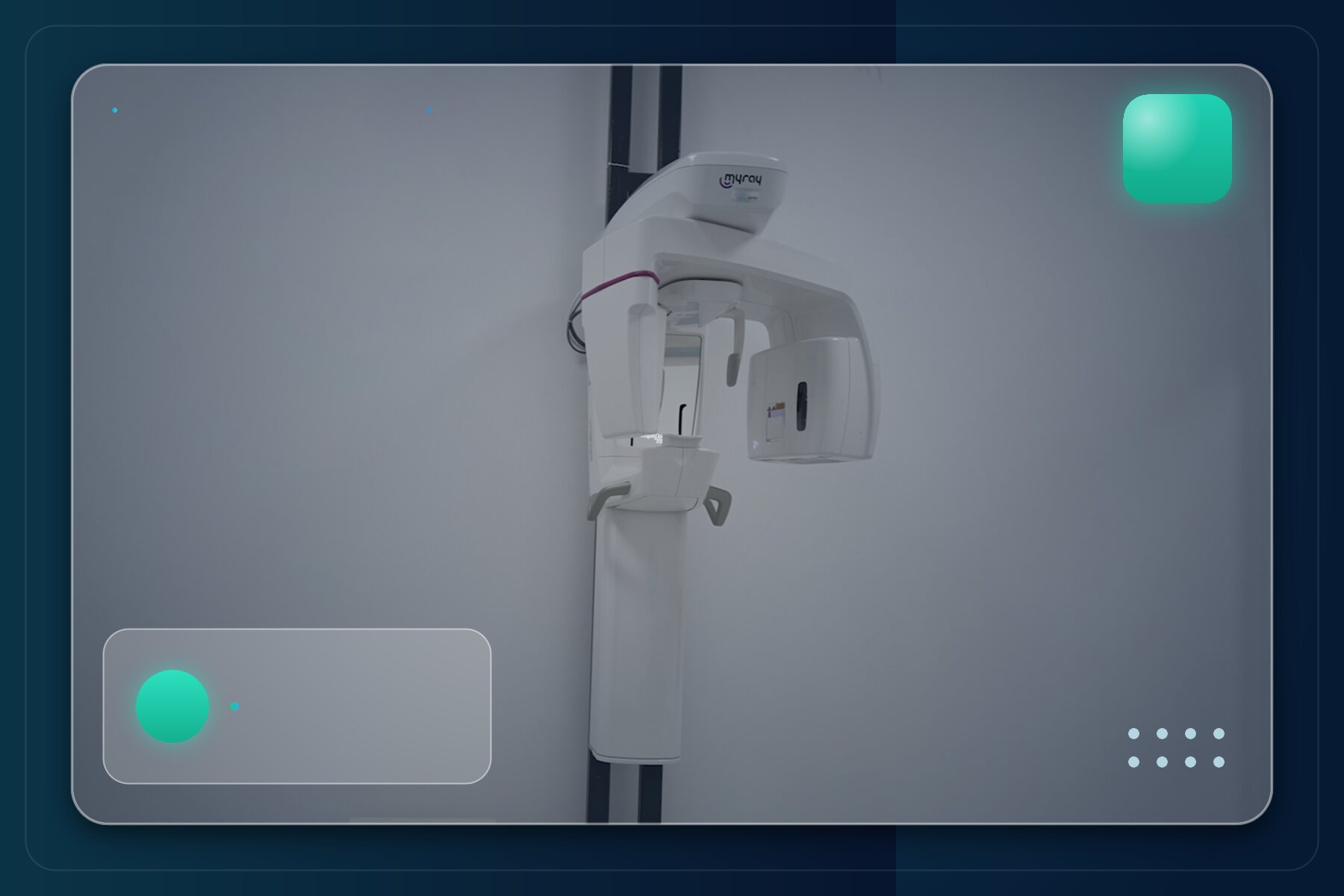
Digital dental X-rays use very low radiation doses: a single intraoral X-ray is roughly equal to the natural background radiation we receive in about one day. A panoramic X-ray uses a little more, and a 3D dental scan (CBCT) considerably more, so it is only taken when truly needed. X-rays are essential for finding decay, bone loss and infections that cannot be seen; how often they are taken is decided by the dentist according to your needs.
Many problems that cannot be seen during an examination – decay between teeth, infection at the root tip, impacted teeth, bone loss – can only be detected with X-rays. The most common question patients ask is: “Is this X-ray harmful?”
Types of Dental X-Ray and What They Are For
| X-ray type | What it shows | When it is used |
|---|---|---|
| Bitewing | Crowns of the back teeth and the spaces between them | Checking for decay between teeth and bone level |
| Periapical | One or a few whole teeth including the root tip | Pain, abscess, before and during root canal treatment |
| Panoramic | All teeth, jaws and jaw joints | General assessment, wisdom teeth, implant and orthodontic planning |
| 3D dental CT (CBCT) | Three-dimensional view of bone and teeth | Implant planning, impacted tooth–nerve relationship, complex root canals |
Learn more on our dental X-rays page.
How Much Radiation Is in a Dental X-Ray?
We are all constantly exposed to natural background radiation from the ground, air and space. According to RadiologyInfo, the patient information site of the American College of Radiology and the Radiological Society of North America, the dose from an intraoral dental X-ray is about the same as one day of natural background radiation. A panoramic X-ray is in the range of a few days. CBCT doses vary with the machine and the area scanned and are clearly higher than 2D X-rays, so CBCT is used only when the extra information will change treatment decisions.
What Precautions Are Taken?
- Justification: X-rays are taken only when needed for diagnosis or treatment, planned according to your decay and gum risk rather than “every year by default”.
- As low as reasonably achievable (ALARA): the lowest dose that gives an adequate image.
- Digital sensors: need lower doses than old film systems.
- Focused beam and correct positioning: reduce the need for retakes.
- Sharing previous X-rays: bringing recent X-rays from another clinic avoids unnecessary repeats.
Can You Have a Dental X-Ray During Pregnancy?
In dental X-rays the beam is aimed at the mouth and the dose reaching the abdomen is extremely low. Even so, during pregnancy only X-rays that are really needed for diagnosis and treatment are taken; planned procedures that can wait are postponed until after the birth. In emergencies such as an abscess or severe pain, the necessary X-ray is taken because delaying treatment can be riskier for mother and baby. Always tell your dentist if you are or might be pregnant. See our article on dental treatment during pregnancy.
Can Children Have Dental X-Rays?
Yes, when needed. Because children are more sensitive to radiation than adults, dose and frequency are adjusted especially carefully according to age and decay risk. Decay between baby teeth and the development of permanent teeth can often be seen only on X-rays.
Digital Imaging at Defne Prime Dent
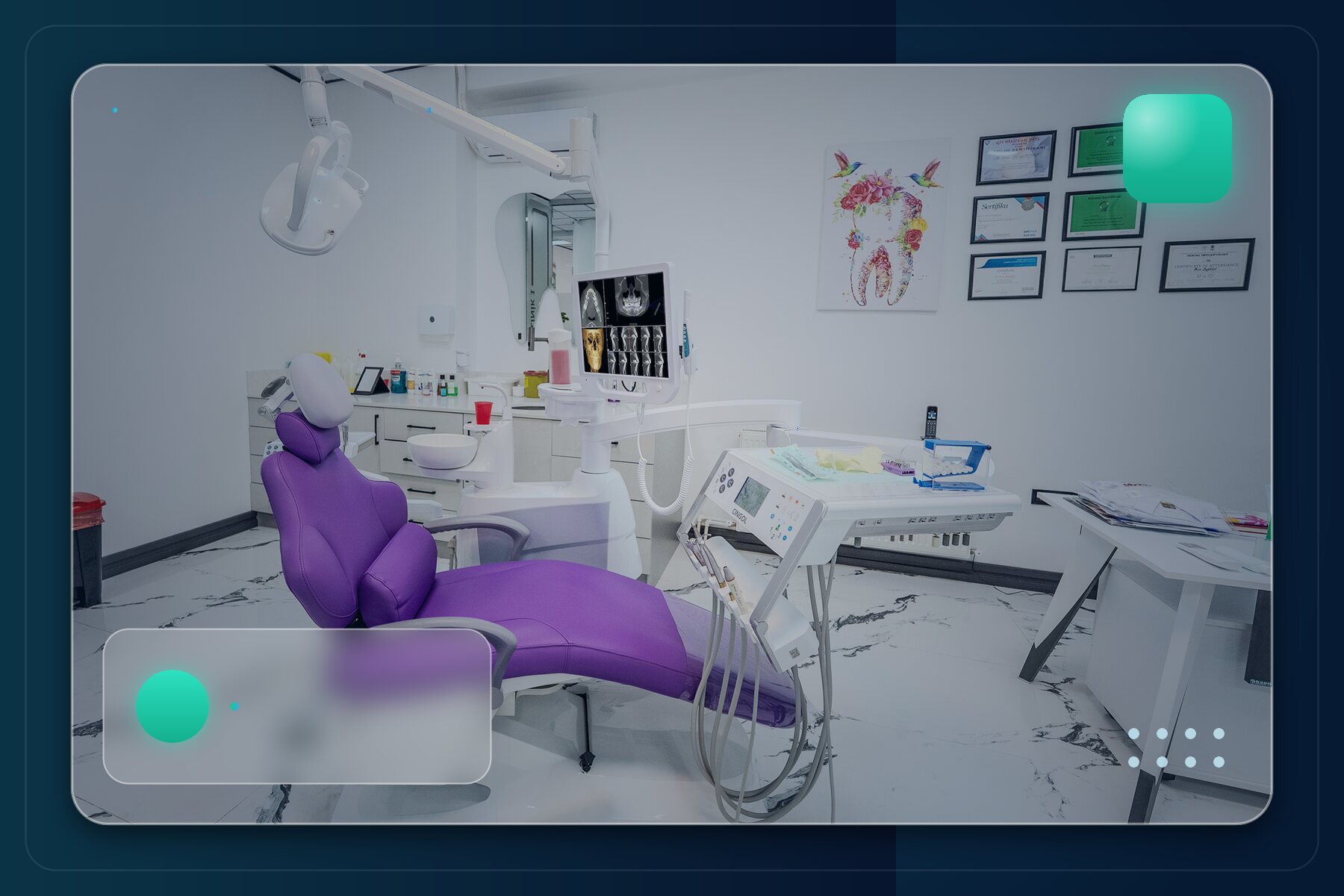
At our clinic in Ataşehir, Istanbul, we use digital intraoral, panoramic and 3D imaging as needed. We explain why each X-ray is taken and aim for the fewest exposures at the lowest dose. Contact us for an appointment.
Frequently Asked Questions
How many dental X-rays can you have in a year?
There is no fixed number. How often X-rays are taken depends on your decay and gum disease risk, symptoms and treatment needs. For a low-risk adult, bitewing X-rays every few years may be enough.
Is a panoramic X-ray harmful?
A panoramic X-ray uses a low dose, comparable to a few days of natural background radiation. When needed, its diagnostic benefit far outweighs this small risk.
Do I need a thyroid collar?
With modern digital equipment, the thyroid dose from intraoral X-rays is very low. A thyroid collar may be used, especially for children and when the thyroid is close to the beam, provided it does not interfere with the image.
When is a dental CBCT scan needed?
For measuring bone volume before implants, seeing how impacted teeth relate to nerves, or in complex root canal and surgical cases where a 2D X-ray is not enough.